
First U.S. Packaging EPR Case Goes to Trial: Oregon Lawsuit Enters Trial Phase
The first lawsuit trial for U.S. packaging extended producer responsibility (EPR) programs has arrived. The Oregon case is set for trial on July 13, and the outcome could influence the direction of EPR regulations nationwide.
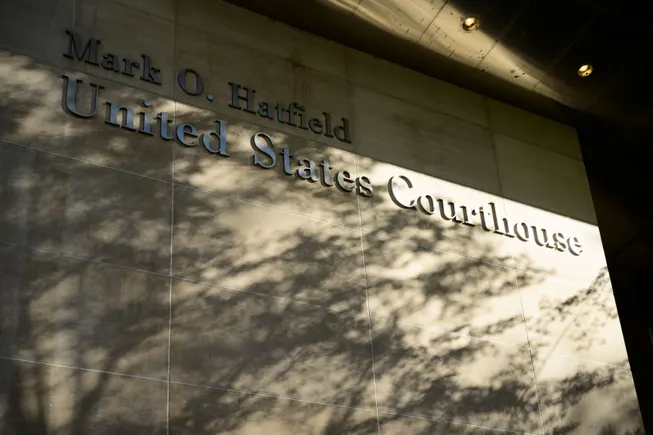
U.S. packaging extended producer responsibility (EPR) programs have achieved several "firsts" over the past few years. In 2021, Maine became the first state to pass a packaging EPR law; in 2025, Oregon became the first state to begin implementing such a program. Next week marks a new milestone: the first packaging EPR lawsuit will go to trial.
This means that by the end of this year, the future risks and opportunities for these programs may become clearer. Alexandra Ward, an environmental attorney at Holland & Knight, called it "like our version of the championship game."
Oregon trial
The National Association of Wholesaler-Distributors (NAW) will attend a five-day trial in Portland, Oregon, starting July 13, less than a year after filing its lawsuit. The case has drawn widespread attention from producers and the recycling industry.
NAW argues that Oregon's packaging EPR program is unconstitutional in two respects: first, it violates the Due Process Clause, particularly by delegating authority to the producer responsibility organization Circular Action Alliance; second, it violates the Commerce Clause because the state program affects out-of-state businesses.
Key timeline of NAW's Oregon lawsuit
- July 1, 2025:Oregon's packaging EPR program launches.
- July 30, 2025:NAW files a lawsuit in the U.S. District Court for the District of Oregon in Portland.
- February 6, 2026:The court grants a preliminary injunction, temporarily blocking enforcement of Oregon's EPR law against NAW members.
- March 16, 2026:The American Forest & Paper Association and other business groups file motions to intervene and for a preliminary injunction.
- April 1, 2026:Motions to intervene are denied.
- April 6, 2026:The court clarifies that the preliminary injunction applies only to entities that were NAW members before February 6, 2026.
- July 13-17, 2026:The case is heard by U.S. District Judge Michael H. Simon.
Ward noted that given the judge has already granted NAW's preliminary injunction, the case clearly has substantive merit.
Karen Harned, NAW's director of litigation and legal policy, told Packaging Dive before the trial that the case provides "proof of concept" and has "grown stronger." "Our members are actively telling their stories, and these will be presented at trial."
Although the judge denied other intervention motions, Harned believes "that doesn't mean these actions haven't helped." "I think it shows that this really affects many people, not just wholesalers." These groups' actions demonstrate that "this is a very broad, unprecedented EPR program, unlike any other," Harned added, "What's illegal is the program structure, and that structure hasn't changed."
The case has garnered support from numerous business associations, including the International Franchise Association and the Restaurant Law Center. Meanwhile, the defendant—Leah Feldon, director of the Oregon Department of Environmental Quality (DEQ)—also has support; The Recycling Partnership recently filed an amicus brief.
Unlike the more mature regulations and programs in Canada or the UK, Ward said, "the patchwork nature of U.S. EPR laws makes it difficult and also makes it potentially challengeable."
Oregon's DEQ has previously said it cannot comment on pending litigation.
Beyond Oregon
Although it remains unclear when Judge Michael H. Simon will issue a ruling, Harned noted that he "has been very engaged from the start." "I know everyone wants a final answer," Harned said, "He understands that. I think that's why he wanted such a short time between the preliminary injunction and trial. So, I hope he'll decide as soon as possible. Is it September, October, or November? I don't know."
Lawyers at Holland & Knight speculate that a ruling could come as early as late summer or early fall. Ward said: "I would be very surprised if 2026 ends without a ruling in this case."
"This will be the first EPR litigation ruling. So, it will have a huge impact not only on Oregon but on any state with an EPR law, and even any state considering adopting one," Ward added.
She noted that depending on the court's ruling, other states may adjust their EPR regulations to reduce or guard against risk.
For example, Minnesota passed a packaging EPR law in 2024 but is still refining specific provisions. Maggie Pahl, another lawyer at Holland & Knight, said: "I believe they will be watching this lawsuit closely."
Ward explained that if the court does find problems with the law, the judge could determine whether certain parts can be preserved, whether it is unconstitutional as applied to specific categories, or whether the entire law needs to be declared unconstitutional.
Although NAW may be the first group to file a lawsuit over packaging EPR, it is not the last. Currently, there are multiple pending lawsuits at the state and federal levels in California, Colorado, and Oregon, with plaintiffs including manufacturers, business groups, environmental organizations, and state attorneys general.
Pahl said the recent wave of new lawsuits is no coincidence. This spring's multi-state reporting deadlines made producers feel the impact. "I think this has prompted many regulated entities to look for litigation opportunities."
"There's an association willing to take the first risk," Ward said, "We realize this is actually not just a single-industry issue, but a problem felt by nearly the entire U.S. economy."