
Social media unboxing videos are prevalent, and the packaging industry is adapting accordingly
Unboxing videos continue to gain popularity on social media, prompting packaging companies to rethink the design and functionality of product packaging. From interior printing on e-commerce boxes to the use of sustainable materials, packaging is becoming an important medium for brands to build emotional connections with consumers and enhance loyalty.
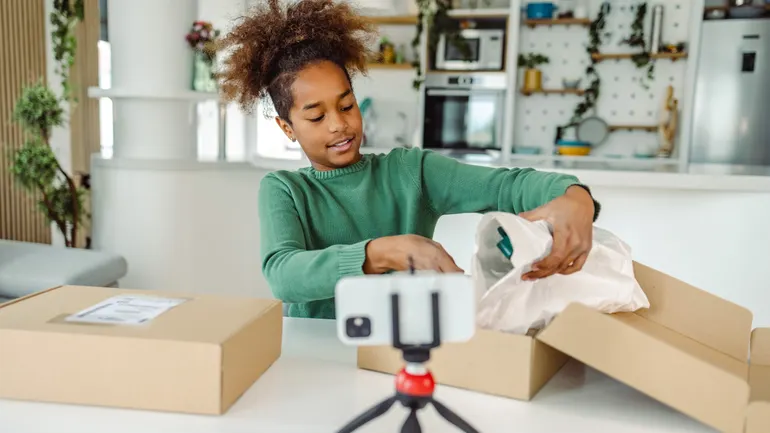
On social media platforms, videos of emotionally charged influencers unboxing new products are endless. Typically, the excitement doesn't begin when the product itself is revealed, but from the moment the e-commerce outer box is opened and the inner protective packaging is touched.
This is "unboxing"—a somewhat unexpected yet steadily growing trend that is drawing close attention from packaging industry professionals. Packaging companies use this exposure opportunity to showcase their capabilities, such as designing products that help build anticipation and excitement in consumers' minds.
The Rise and Evolution of the Unboxing Trend
Modern unboxing videos are widely believed to have gained popularity after YouTube's launch in 2005. Dictionary.com's brief history of the trend describes it as a "peculiar but hugely popular pastime" that gained traction by the end of 2006, with related videos becoming "increasingly popular." In 2014, Google data showed that uploads of unboxing videos on YouTube grew 50% year-over-year, views increased 57% during the same period, and cumulative views surpassed 1 billion. Some also link another surge in popularity to the emergence of TikTok in late 2016.
The pandemic also drove change. Jessica Black, Sales Director at JBM Packaging, said: "The unboxing trend—we really saw it become so important. It was talked about before, but really during the pandemic, I observed a surge in interest." Unboxing videos cover numerous products across industries, and even monthly subscription boxes and meal kits are often featured.
Chris Bradley, Chief Marketing, Design, and Sustainability Officer at Orora Packaging Solutions, noted: "Especially against the backdrop of e-commerce growth, more and more brands are looking for opportunities to express themselves, and that's reflected in the unboxing experience."

The E-commerce Driver
The unboxing craze is closely tied to the surge in e-commerce; influencers rarely buy the products they showcase in physical stores. According to MNTN Research, a television, video, and media data company, e-commerce is one of the top four industries for unboxing videos, alongside technology, direct-to-consumer, and consumer packaged goods. U.S. Census Bureau data shows that e-commerce sales in the first quarter of 2023 grew 7.8% year-over-year, accounting for 15.1% of total retail sales that quarter, exceeding $253 billion. As consumer purchasing patterns continue to shift, this popular sector is expected to expand its share further.
Ryan Fox, corrugated packaging market analyst at Bloomberg Intelligence, said: "E-commerce really has been the only market segment showing vitality for quite some time." He noted that major brands like Amazon, Chewy, Target, and Walmart receive much attention, "but there's another side"—namely, numerous small boutique businesses.
The Fibre Box Association states that corrugated boxes are the backbone of e-commerce. Packaging companies have fully embraced and leveraged their role in online shopping, launching shipping products tailored to this sector. Last year, International Paper introduced the bow-tie shipper, a patent-pending, glue-free design that can be quickly assembled by hand, aimed at replacing small glued corrugated shipping boxes used in e-commerce. WestRock called this sector "an increasingly integral part of the shopping ecosystem" and stated that its standalone e-commerce packaging machine, BoxSizer, can produce right-sized boxes on demand. Packaging Corp. of America said e-commerce packaging "enhances brand image and builds loyalty by delivering a unique customer experience."
Emotional Response
Psychological research behind unboxing shows that the act is deeply connected to human emotion. When influencers reveal themselves opening packaging and touching the product, anticipation and adrenaline surge. It's like the digital version of the thrill from tearing open a gift or engaging in "show and tell."
Cory Connors, Director of Sustainable Packaging at Orora Packaging Solutions, said: "When you receive something, there are feelings, emotions, touch, and smell. All the senses work together to form that opening experience." Brands understand this emotional response and leverage it—not just to attract social media influencer attention, but to build closer connections with consumers and drive repeat purchases. Using emotion helps brands transform transactional relationships into emotional ones.
Fox said: "They want to win the hearts and minds of buyers, and unboxing is one way they connect with buyers and instill brand loyalty." Packaging companies work to help clients create this emotional experience within their specific audiences. Solutions that create powerful, memorable moments aren't the same for every company, product, or consumer group, but they often involve the effective use of emotion.
Black said: "With so much e-commerce purchasing, how do you turn a transaction into a meaningful experience? How do you turn it into a relationship? What can you do to build customer engagement that you typically can't get through a transactional e-commerce purchase?" She cited a large e-commerce beauty company that partnered with JBM to create an unboxing experience with a unique criterion for packaging material: describing its sound. They ultimately chose glassine, a 100% fiber-based material that resembles parchment or wax paper, "because it makes a crackling, exciting sound—almost like rustling through packages on Christmas morning," Black said. "It helped them bring that moment to life."
"During the design process, I think about how a YouTuber or customer would unbox it, because we want that 'aha' or 'wow' moment."

Chris Bradley
Chief Marketing, Design, and Sustainability Officer at Orora Packaging Solutions
Another JBM client, T-shirt maker Johnny's Cupcakes, also chose glassine with special printing and found that consumers shared their unboxing experiences on social media with glowing praise.

Demand for Customization
While unboxing videos initially focused mainly on influencers' impressions of products (often for some form of compensation), the trend has evolved to also showcase packaging. Whether or not the video host deliberately describes the packaging, it makes an impact. More brands are responding to this trend by moving beyond plain brown shipping boxes, demanding colorful, diverse design options to stand out, especially considering the consumer unboxing experience. Packaging companies are rising to this challenge.
Cascades offers a custom mailer box positioned for online sales and monthly subscription services that can "impress customers." Smurfit Kappa notes that e-commerce packaging "is itself a marketing tool," and every delivery should leave a lasting impression; some of its showcased custom box designs feature bold, eye-catching colors and graphics.
Packaging companies say they specifically consider the consumer experience and unboxing process when designing packaging. Bradley said: "During the design process, I think about how a YouTuber or customer would unbox it, because we want that 'aha' or 'wow' moment." This design approach requires thinking about how to "work backwards to ensure our packaging matches the experience you want people to talk about," and finding "those white spaces where there's a customer need to make it special, customized, and different," Black added.
Custom packaging typically costs more than mass-produced options. But clients are increasingly willing to pay a premium for attention-grabbing and engagement-boosting features. In some cases, they pass the higher costs on to consumers and market higher-priced products and the unboxing experience as a "premium" experience.
The Value of Interior Printing
In the past, corrugated box printing was mainly limited to the exterior. But advances in materials and machinery have made printing inside boxes possible, pushing the consumer experience to new heights. Over the past decade, increased use of digital printing technology suitable for packaging has been a major driver of interior box printing. Companies like Buckeye Corrugated offer a variety of box styles with brand messages printed on the inside walls.

Fox said: "From a digital printing standpoint, there are currently about 60 single-pass digital presses operating in North America with inside and outside printing capabilities." Digital printing is "a great mechanism for e-commerce because it really enhances the unboxing experience." Digital printing sends digital files to the printer, using inkjet rather than flexographic or offset printing plates, allowing designs to be modified faster and more easily, eliminating plate change costs and reducing waste.
Although Fox says interior printing "isn't always cheap for customers," more brands are willing to pay extra to engage consumers in unique and exciting ways. "Almost all the logic companies use for decision-making has to be thrown out the window," he said. "It's an emotional strategy, so you have to deal with emotional rather than logical decision factors. Cost might be one of them."

Pursuing Sustainability
Sources say clients are also seeking sustainable packaging solutions. Bradley said: "You don't have to sacrifice the unboxing experience to achieve sustainability. When it's done well, it's like, 'Wow, look at what they did—it's sustainable and beautiful, you don't have to give anything up.' That's the magic."
Some retailers enhance their eco-friendly image by seeking paper packaging products with sustainability certifications, such as Forest Stewardship Council or Sustainable Forestry Initiative certification. Connors said: "We increasingly learn that when people open items and the packaging is sustainable and intentional, reviews are significantly higher and sales increase."
JBM Packaging itself is a certified B Corp and is committed to providing clients with better solutions, potentially involving new materials or processes, including enhancing the unboxing experience for environmentally conscious consumers, Black said. "When you have to open a box within a box, that's terrible," she said. Beyond improving corrugated box sustainability, JBM helps clients make inner packaging more sustainable, such as finding fiber-based alternatives for plastic film bags on clothing.
Orora is also focused on layered sustainable packaging solutions. Recently, it announced it became the first distributor of Flexi-Hex in North America, a patented hexagonal honeycomb fiber packaging designed to replace plastic protective packaging such as foam peanuts or inflatable plastic cushions.

Why Is It So Popular?
Marketing and loyalty benefits explain why brands and packaging companies are diving into the unboxing trend. On the consumer side, watching unboxing videos seems to be a more authentic, credible way to learn about a product before purchase compared to written reviews, which may be paid, Connors said. Although videos may also be paid, some social media users may feel videos provide more detailed, nuanced explanations that can be verified through their own observations.
But one pressing question remains: Why do so many people make these videos? In short, audiences flock to them, and influencers can earn substantial income from brands hoping they'll share impressions and attract new customers. After all, Google's 2014 study showed that 62% of unboxing video viewers were researching a specific product before purchase. Connors also mentioned that posting unboxing videos is a form of personal branding and ongoing engagement with one's audience. "It's a way to mutually engage and promote things you think are good for the environment or good for your audience," he said. "That's how the world works today. They want to involve people in their lives."
Whatever the reason, the unboxing trend shows no signs of fading in the near term. Until it does, packaging companies will continue updating products and services to enhance the consumer experience—and appear in some truly viral social media videos. Black said: "It's funny that people actually want to watch their own orders being opened. I never thought that would become a thing. But it seems to be increasingly important."