
Customization, AI, and scannable codes are seen as future opportunities for digital printing
The application of digital inkjet printing in the packaging industry is still in its early stages, but equipment manufacturers, converters, and analysts believe it will see significant growth in the future, incorporating new features such as artificial intelligence and scannable codes.
Editor's note: This is the final article in a three-part series exploring how digital inkjet printing is transforming the packaging industry.
Equipment manufacturers, converters, and analysts point out that the impact of digital inkjet printing on the packaging industry is only just beginning to emerge. They predict that the future of this technology lies not only in capturing significant market share but also in adding features such as artificial intelligence, scannable codes, and other potential capabilities.
According to data from consulting firm Keypoint Intelligence, digital inkjet printing currently accounts for only 2% of total packaging printing volume, but its adoption is expected to accelerate soon and, in some cases, replace analog printing methods such as offset and flexography.
"You will see increased competition in this space, and I am very confident that in the next one to two decades, we will shift to more digital printing technologies—replacing the flexographic and gravure presses we have run for decades," said William Barlow, market development manager at Printpack, which uses digital printing for flexible plastic packaging.
Rob Daniels, digital business manager at packaging company Fortis Solutions Group, agrees.
"I think in the coming years, you will see... the share of digital printing almost double," partly due to its superior job quality, including "gradients, images, four-color printing," among others. "I really think digital printing will continue to eat into a lot of our medium-to-long-run flexographic business."


New Features Emerge
Converters continue to discover new applications and market opportunities, such as artificial intelligence, personalization, and sustainability.
"Many brands are moving away from single-use plastic packaging... Many clear pouches are being replaced by paper pouches, and since you cannot see through them, you need to print on them to indicate the contents," said Philippe Lesage, vice president and general manager of HP's Specialty Printing and Technology Solutions business. "So there is new demand for digital printing."
Beyond the market growth of the technology itself, its capabilities are also expected to expand. At a basic level, the technology may become faster, more efficient, and cheaper.
"Digital printing will be able to do more in the future," said Robert Seay, vice president of digital printing strategy and growth at Georgia-Pacific. "It is still evolving, still growing, and it will likely continue to evolve and grow for some time."
For example, Seay said digital printing will "integrate with corrugating processes, integrate with finishing processes, integrate with other downstream capabilities... This will enhance the capabilities of brands and their converting partners."
Further corrugated integration may involve connecting digital inkjet printing with laser die-cutting equipment, replacing traditional rotary and other corrugated die-cutting methods. Sources say this would eliminate the analog processes of printing and cutting, creating a fully digital production line that makes every step more precise.
Equipment manufacturers will also advance artificial intelligence in new ways to further optimize processes and reduce operating costs, said Ryan Fox, corrugated packaging market analyst at Bloomberg Intelligence. Machine learning and AI can be used for predictive maintenance, enabling equipment to monitor its own maintenance needs.
AI can also assist with quality control for specific print jobs, such as detecting print defects and automatically calibrating or adjusting processes. It can also improve the precision with which equipment deposits ink droplets onto substrates and provide automatic color correction or enhancement.

.jpg)
Customization Upgrades
Converters report a surge in demand for packaging customization and personalization as brands and retailers seek better connections with consumers. Digital inkjet printing meets these needs, and converters believe it will also meet future growing and evolving customization demands.
Both printing on the outside and inside of boxes are already known use cases of the technology's customization capabilities, and further evolution will open deeper opportunities in these areas, said Ken Hanulec, global vice president of marketing at equipment and services provider EFI. For example, printing inside boxes is being explored to enhance e-commerce security and prevent theft.
Hanulec predicts that at the drupa 2024 trade show in Germany, at least one major e-commerce company will make an announcement taking outside and inside box printing to new levels, and "security will be a component of that."
Converters are also optimistic about digital inkjet printing's capabilities in versioning, such as printing different images or information on different packaging of the same product—for example, the same beverage can featuring different sports team logos in different regions.
AI will also assist in this area, said Bloomberg's Fox, describing a level of optimization where a system can handle six separate print jobs simultaneously. "From a production standpoint, if you are no longer running one job at a time—that is efficiency," he added. "The next step is not just versioning, but true customized variable data printing for packaging."
Variable data printing involves loading a data set into the printing system and extracting customizable information from it. Simpler systems can print the same promotional ad with different consumer names. More advanced versions can mine data on individual consumers' preferences based on purchasing habits and incorporate that into the message.
"We do a lot of variable data printing," said Fortis's Daniels, mentioning the "Share a Coke" campaign with Coca-Cola, which printed consumer names on different bottle labels—a personalization initiative widely regarded as successful in connecting with consumers and boosting sales.
To date, variable data printing has been used mainly for labels, flyers, or other loose marketing materials, rather than directly on packaging. Sources predict that future digital inkjet technology will push this type of marketing into the mainstream and make it more sophisticated.
One client asked printing and marketing solutions company Quad to place a variable QR code on each of 500 items in an order. This would allow each randomly printed code to perform a slightly different action or record different data when scanned by consumers. Unfortunately, this is not yet a digital inkjet capability Quad currently has, said Smith Lankford, general manager of Quad's packaging division.
"The front end—the engine that drives the press—is not intuitive," he said. "But I am optimistic that with advances in AI and machine learning, maybe they can do it... I think this is where digital printing truly changes the consumer experience."

Cracking the Code
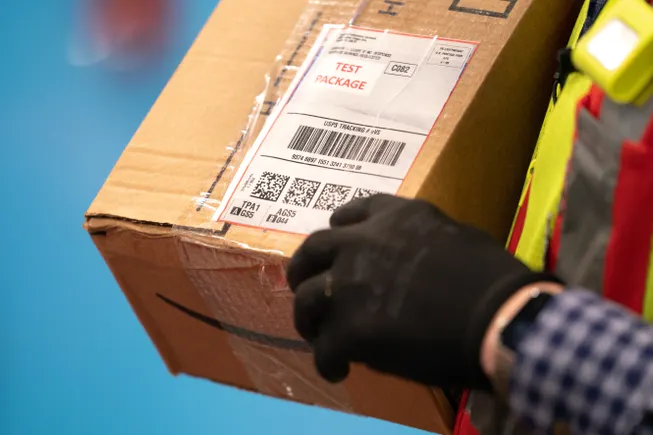
Digital systems provide higher quality, clearer images to ensure codes and other product markings are scannable. Converters are already using digital inkjet printing for marking and coding, but this use case is expected to become more widespread and advanced.
Additionally, HP's Lesage noted that with the arrival of Sunrise 2027—when international standards organization GS1 replaces the 50-year-old one-dimensional barcode with two-dimensional barcodes—high-quality code printing will become even more important. One-dimensional codes typically offer only basic price lookup functions, while QR codes (scannable with smartphones) allow more granular, multi-directional information transfer.
Next-generation codes will provide data to users in the supply chain, including brands, logistics companies, and even consumers. For example, QR codes are experiencing a renaissance as a way to provide customers with additional data about products and packaging.
"Brands must implement a lot of data and marking infrastructure, but that is where the world is heading in the next four years," Lesage said. Sources say further integration of AI should enhance security and protect customer or consumer data.
As converters discover new efficiencies through digital inkjet presses and additional AI, it is not just about the technology itself, but about adopting a different mindset for packaging printing—and being open to discovering untapped potential, Fox said.
"It is about thinking in a completely different way about how to produce—no longer confined to rigid frameworks," he said.
Visual editor Shaun Lucas provided image support for this report.