
Graphic Packaging Releases Sustainability Report, Chief Sustainability Officer Departs
Graphic Packaging International released its 2025 sustainability report on June 30, and on the same day, Chief Sustainability Officer Michelle Fitzpatrick announced her departure, ending a tenure of nearly five years. The report shows slight setbacks in some emissions and recyclability targets, while the company remains committed to its long-term goal of net-zero emissions by 2050.
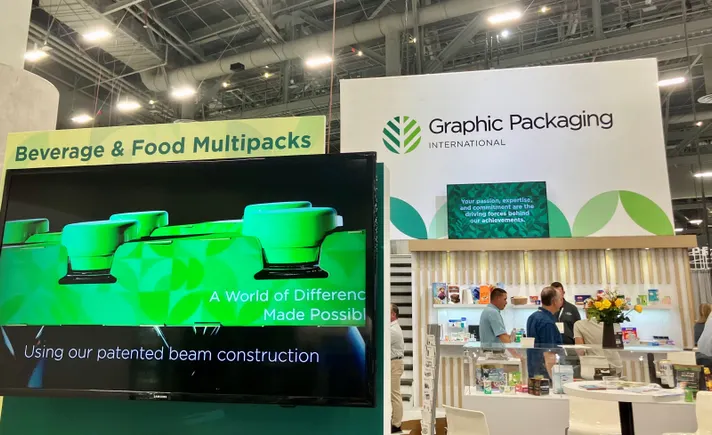
Graphic Packaging International (GPI) released its2025 Sustainability Reporton June 30. On the same day, Chief Sustainability Officer Michelle Fitzpatrick announced her departure viaa LinkedIn post, ending a tenure of nearly five years.
Fitzpatrick was GPI's first Chief Sustainability Officer, appointed to this newly created position in 2021.In a 2023 interview with Packaging Dive, Fitzpatrick describedthe evolution of GPI's sustainability strategy, particularly adjustments driven by changing external conditions. For example, she detailed how the company shifted from intensity-based targets to absolute targets set through the Science Based Targets initiative (SBTi).
"Science-based targets are a great example of thinking about how to balance growth and progress," she said at the time. "The traditional mindset is that you can't grow without growing emissions."
As of press time, Fitzpatrick had not responded to Packaging Dive's request for comment.
A GPI spokesperson confirmed via email that Fitzpatrick departed on Tuesday, June 30, and said the company appreciates her leadership and contributions to its sustainability programs. The spokesperson stated that sustainability remains an important part of GPI's business strategy and that the company is "adjusting the operating model of its sustainability team to advance this work."
GPI did not respond to questions about the reason for Fitzpatrick's departure or whether it plans to fill the Chief Sustainability Officer position or eliminate it.
Over the past year, chief sustainability officers have departed across various industries, and some companies have not named successors, such asApple. Companies including Wells Fargo andUnileverhave eliminated the chief sustainability officer title whilerestructuring their sustainability functions, though they retain teams to handle related matters. Companies like WM have moved their chief sustainability officersinto other operational roles。
Sustainability progress
GPI's report shows slight setbacks in some emissions and recyclability goals. The company remains committed to its long-term goal of achieving net-zero emissions by 2050.
In 2025, 96% of packaging sold by the fiber packaging specialist was classified as recyclable, slightly down from 97% in 2024.
Regarding its goal of using 90% renewable fuel in its wood-based paperboard mills by 2030, GPI reached 76% in 2025. Although this is higher thanthe 74% in 2024, the company noted it is reviewing capital expenditure plans, which could delay achievement of this goal until after 2032.
GPI's emission reduction targets were approved by SBTi in 2023.
By 2030, the company aims to reduce Scope 1 and Scope 2 emissions by 50.4% from a 2021 baseline. As of the end of 2025, the company had achieved a 4% reduction, compared toa 10% reduction at the end of 2024, marking a decline.
By 2032, GPI aims to reduce Scope 3 emissions by 30% from a 2021 baseline. The company reported a 15% decrease in 2025, compared to a 3% decrease the previous year.
"I am energized by the momentum we are building. We are proving that doing the right thing and delivering results are not competing priorities," Fitzpatrick said in the report.
A string of executive departures
Fitzpatrick's departure comes amid significant changes at the company over the past seven months, includingthe elimination of approximately 500 jobsas part of a restructuring, representing about3% of its global workforce。
Robbert Rietbroek became CEO earlier this year, after GPI in Decembercontroversiallyannounced that former CEOMike Doss would step down。
Doss and former GPI CFO Stephen Scherger (who departed in November tobecome CFO of Amcor) were named as defendants in a class-action lawsuit in May, whichaccuses them of violating federal securities laws, misleading investors.
Last week,Doss was named CEO of Global Cellulose Fibers. The company was formed in January after being acquired by private equity firm American Industrial Partners from International Paper for$1.5 billion.