
Frontiers of Packaging Innovation: New Breakthroughs in Novel Cans and PCR Materials
The packaging industry continues to enhance performance and sustainability through material and structural innovations. This article summarizes six recent developments, including Sazerac's transparent canned vodka water, PureCycle's PCR resin applications in hinged lids and BOPP films, Elopak's low-carbon aluminum, Toppan's paper-based light-blocking card packaging, and Molson Coors' World Cup-themed large cans.
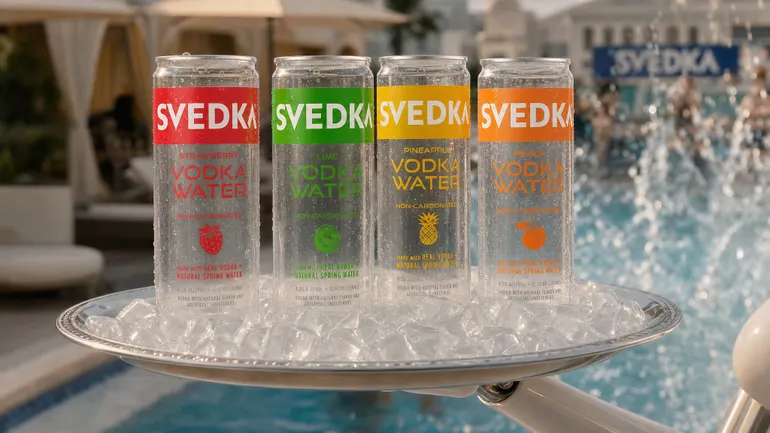
Companies are constantly innovating and redesigning packaging to improve performance, enhance sustainability, and boost market appeal. The following are six packaging developments recently highlighted by Packaging Dive.
Clear vodka canned water
Sazerac has launched Svedka Vodka Water, featuringclear packaging, which it calls the "world's first clear canned vodka water," offering consumers an "intuitive visual cue to know exactly what they are drinking—simple and pure in every sip." The product hits shelves this month, available in 8-packs and single 12-ounce cans.
Two applications for PureFive resin

Polypropylene recycler PureCycle Technologies announced this month that its PureFive resin has been used in two new applications.
PureCycle partnered with StackTeck Systems to producehinge capsmade with up to 100% PureFive, a recycled resin produced via a dissolution process. The announcement states: "This milestone demonstrates that post-consumer recycled (PCR) resin can meet the demanding mechanical performance requirements of one of the most technically challenging applications in packaging." The application is highly demanding because hinge caps must withstand hundreds of bending cycles. The hinge caps are now available for trial upon request.

Additionally, PureCycle recently collaborated with Innovia Films to develop awhite microvoided biaxially oriented polypropylene (BOPP) filmcontaining over 40% PCR. PureCycle notes that confectionery wrappers, ice cream novelty packaging, snack wrappers, and roll-fed labels are all potential applications.
Reducing carton carbon footprint
Norwegian carton expert Elopak is sourcingaluminum produced with renewable electricityfor its European carton production to reduce the packaging's emission intensity. The company says this is "an important step in reducing the climate impact of packaging materials." Elopak states: "Switching to low-carbon aluminum can immediately reduce the carbon footprint of Elopak's standard aseptic aluminum foil cartons by 8%." Although cartons are primarily fiber-based, the aluminum layer helps extend shelf life through aseptic sealing and blocking light and oxygen.
Plastic-free protective playing cards

Japanese packaging company Toppan claims to have developed Japan's "firstlight-blocking paper pillow packaging" for trading cards, using its proprietary material combination to replace plastic with paper while achieving at least 98% light-blocking. Additionally, the improved metallic-look packaging uses equipment that "minimizes wrinkle formation during the bag-making process."
Previously, paper packaging had some light transmission, which could lead to "card peeking"—consumers trying to check for rare cards before purchase. Toppan says samples will be available to trading card manufacturers starting this month, with mass production expected to begin in the fall.
Goal time: Cooooors big can

With the World Cup underway, beer distributor Molson Coors has timely launchedThe Coooors Light Tallerboy, designed to quench the thirst of fans celebrating. The can holds the equivalent of three standard cans. This limited-edition product is available for direct order this month through the Coors Light online store for $30.