
Packaging and Materials Industry Groups Testify at Section 301 Tariff Investigation Hearing
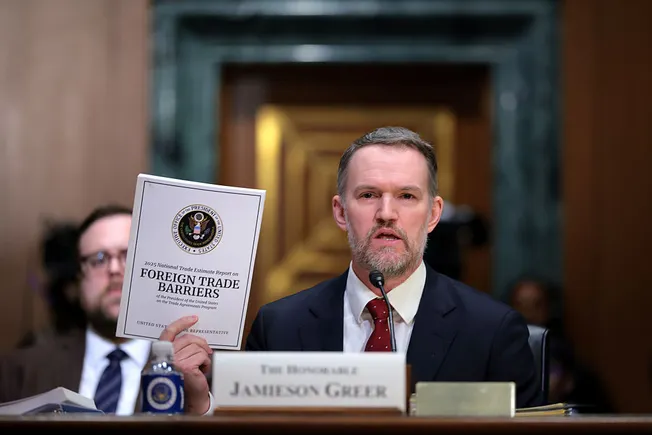
The Office of the United States Trade Representative held Section 301 tariff investigation hearings this week regarding structural overcapacity in 16 countries and regions. Representatives from the Can Manufacturers Institute, the American Forest & Paper Association, the Aluminum Association, the Institute of Scrap Recycling Industries, and the American Chemistry Council testified, generally supporting tariffs to address unfair competition while emphasizing the need for caution, targeted measures, and attention to risks such as raw material supply.
Briefing at a Glance
- This week, multiple packaging and materials industry associations testified before the U.S. Trade Representative (USTR) regarding a new round ofSection 301 tariff investigation. The investigation, launched inMarch, examines the impact of production and overcapacity in 16 countries or economies on U.S. manufacturing.
- Testifying organizations included the Can Manufacturers Institute (CMI), the American Forest & Paper Association (AF&PA), the Aluminum Association, the Association of Plastic Recyclers (APR), and the American Chemistry Council (ACC), among others.
- Overall, speakers described the harm caused by anti-competitive policies in the named countries to U.S. manufacturing and supported the tariff concept, while cautioning USTR to respond carefully and in a targeted manner.
In-Depth Analysis
This hearing is one of several actions USTR is currently undertaking regardingSection 301 tariffs. On Wednesday, USTR also announced it had begun reviewing the Section 301 tariffs imposed onChinese importsduring the first Trump administration. The Section 301 tariffs are separate measures from the comprehensive tariffs implemented by the Trump administration over the past year.
The hearings from Tuesday through Friday this week involve a Section 301 investigation covering China, the European Union, Singapore, Switzerland, Norway, Indonesia, Malaysia, Cambodia, Thailand, South Korea, Vietnam, Taiwan, Bangladesh, Mexico, Japan, and India, based on aFederal Register document。
issued by USTR in March. Factors USTR is evaluating include potential supply-demand imbalances, wage suppression policies, and market access barriers. The investigation names U.S. manufacturing sectors potentially affected by overcapacity, including aluminum, steel, glass, paper, plastics, and food and beverage processing.
"Imposing Section 301 tariffs would help protect and benefit American farmers and food producers, which in turn would mean a stronger U.S. can manufacturing industry and more reason to invest in aluminum and steel production in the United States," said Scott Breen, President of the Can Manufacturers Institute, in written testimony submitted while testifying on Thursday.
"CMI estimates that approximately two billion food cans are imported into the United States each year, and this number continues to rise due to the relatively low tariff costs on foreign-filled food cans, while the U.S. metal can value chain must absorb Section 232 tariffs on aluminum and steel," Breen noted. U.S. retailers and institutions are increasingly choosing foreign-filled food cans.
CMI also "strongly urges extreme caution in taking any additional actions on aluminum and steel used in can manufacturing, especially targeting non-Chinese sources, because U.S. can manufacturers cannot obtain sufficient quantities of these metals domestically to meet demand, and they are already under cost pressure from existing Section 232 tariffs on aluminum and steel."
The Aluminum Association also called on USTR to taketargeted, enforceable actionsthat distinguish normal market behavior from foreign government-supported distortions such as subsidies, state ownership, and below-market-rate financing.
"The U.S. aluminum industry can compete with anyone in the world—but not with foreign governments," said President and CEO Charles Johnson while testifying on Thursday. "State-driven overcapacity continues to distort markets and disadvantage U.S. manufacturers."
Similarly, AF&PA, while supporting USTR's review,called for a cautious, evidence-based approachto the matter.
"Trade policy shapes manufacturing decisions," said David Ross, AF&PA's Director of Government Affairs, while testifying on Thursday. "We support a fact-based overcapacity review while avoiding measures that could jeopardize U.S. jobs, investments, or operations."
Ross specifically identified China as a country of concern due to its support for massive capacity expansion and exports that do not match market demand. AF&PA also suggested USTR investigate countries that may circumvent trade measures by transshipping goods and materials through countries not under review.
The Association of Plastic Recyclers similarly identified China as a country of particular concern, along with other Southeast Asian countries including India, Indonesia, South Korea, Malaysia, Taiwan, Thailand, and Vietnam.
"These countries are not simply competing," said APR President and CEO Steve Alexander while testifying on Thursday. "They are flooding the U.S. market with rapidly growing import volumes at sharply declining prices."
He cited data showing that between 2021 and 2025, imports from India grew by more than 1,200% while prices fell by over 60%. He also described China's role in driving global overcapacity in virgin plastics, which puts pressure on recycled plastic prices.
Alexander said the U.S. recycled PET industry is "at a breaking point," withseven PET recyclers having closedin the past 15 months, requiring intervention. "They are not closing because they are inefficient, but because the market has been distorted by a wave of low-priced imports that these facilities cannot withstand."
USTR alsoacknowledged thiswhen launching the investigation: "With respect to polyethylene terephthalate (PET), the evidence suggests that as China continues to purchase low-cost Russian oil, Chinese chemical companies are causing PET overcapacity."
Jason Bernstein, Director of International Trade and Supply Chain at the American Chemistry Council, testified on Tuesday that overcapacity fueled by unfair trade practices isharming U.S. plastics production. He urged USTR to address the root causes of overcapacity while safeguarding U.S. companies' access to raw materials.
"A value-chain approach would enable trade policy to respond decisively to these distortions while securing access to critical inputs and supporting U.S. reindustrialization, exports, and high-wage jobs," he said.
Rebuttal comments after the hearings must be submitted within seven days.