
California SB 54 Drives Reusable and Refillable Packaging Systems into Practical Testing Phase
California's SB 54 requires producers to reduce plastic packaging material by 10%, 20%, and 25% by 2027, 2030, and 2032, respectively, with at least 10% of that reduction achieved through source reduction, meaning a shift to reusable or refillable packaging. The assessment report commissioned by CalRecycle from organizations such as Eunomia and Perpetual shows that closed-loop reuse systems are the most attractive in the short term, but transitioning to this model requires substantial investment, with cumulative investment estimated between $8 billion and $15 billion. A pilot project involving cup reuse at 30 businesses in Petaluma provides valuable practical data, while the role of recycling service providers like Recology in this effort remains open to discussion.
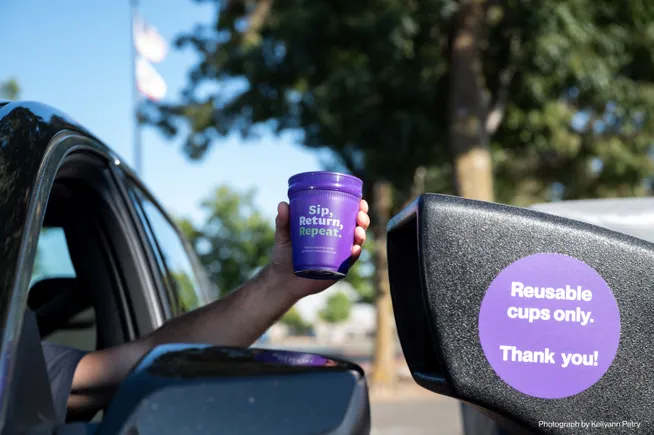
As producers prepare to comply withCalifornia's Producer Responsibility Law SB 54, the state is becoming a testing ground for reusable packaging collection and refill programs.
A set of source reduction needs assessment reports released by CalRecycle earlier this year provides an initial look at what this means for the state's collection system. These reports—one focusing on theactions and investmentsneeded across the value chain, and another delving intoopportunities and barriers—detail the costs, benefits, and complexities of reuse and refill packaging systems.
SB 54 requires producers to reduce plastic packaging material by 10% by 2027, 20% by 2030, and 25% by 2032. At least 10% of that must come from source reduction—that is, actually eliminating some single-use packaging through strategies such as shifting to refillable or reusable packaging or food service ware.
Research consulting firms Eunomia and Perpetual contributed to these studies, exploring various reuse models and strategies. The assessment notes that closed-loop reuse systems—which do not require transporter involvement if collection and cleaning are done on-site—are the most attractive in the short term.
The most effective examples include converting single-use food service ware in schools or stadiums to reusable products, expanding business-to-business (B2B) reuse models, and scaling up business-to-consumer (B2C) models based on "pre-filled" packaging.
Pre-filled models rely on reverse logistics operations to collect and clean reusable packaging. In California, Straus Family Creamery uses returnable glass bottles for some of its dairy products. Consumers pay a $3 deposit, which is refunded when they return the empty bottles to stores.According to Straus, customers return and reuse more than 3.5 million bottles each year.
Elizabeth Balkan, a zero-waste policy and systems consultant who worked with Perpetual on the assessment, said pre-filled models reduce the burden on consumers while allowing producers to reduce packaging waste.
In a retail setting, she said, the product looks no different from single-use packaging. "It doesn't require the consumer to bring their own packaging, and it doesn't require the consumer to remember to take it to the store and then participate in the refill behavior."
But Balkan noted that shifting from single-use packaging to refillable formats may require producers to make costly adjustments to their supply chains. The needs assessment estimates that each new packaging design could cost $100,000.
Lessons from the Petaluma reuse pilot
Petaluma Coffee & Tea Co. is a popular Bay Area coffee shop known for its on-site roasting and laid-back style. But Ashley Harris, the shop's retail and marketing manager, is deeply bothered by one thing.
Early in the COVID-19 pandemic, plumbing issues at the cafe reduced its dishwashing capacity. Since then, the cafe has had to rely on single-use cups.
"We see the waste from takeout cups going in and out, and it's quite painful," she said.
So in early 2024, when Harris learned about a citywide cup reuse program, she was excited to participate.
Petaluma Coffee & Tea is one of 30 businesses in this Sonoma County town of about 59,000 residents participating in thePetaluma Reusable Cup Project. The pilot launched in August 2024 and ran for 12 weeks.
The project, led by the NextGen Consortium at Closed Loop Partners, aimed to test the feasibility of a citywide reuse program as an alternative to reliance on single-use cups. The project also helped its partners—including Starbucks, Coca-Cola, McDonald's, and Yum! Brands—understand how reuse and refill models could work in their operations to comply with California's EPR requirements.
"Reuse is not a problem any single brand can solve on its own," said Carolina Lobel, senior director of the Center for the Circular Economy, the innovation arm of Closed Loop Partners. "We need citywide programs to scale up usage."
Participating businesses served drinks in purple polypropylene cups, and customers were asked to return the cups to one of 60 large purple collection bins placed throughout Petaluma.
Lobel said the results of the Petaluma pilot were encouraging. The project was supported by Muuse, a company that supports the operations and logistics of reusable packaging systems, and Dispatch Goods, which provided cleaning services.
Petaluma's contracted hauler, Recology, supported the project by setting up a special collection stream to capture any purple cups that ended up in the recycling stream. Lobel said that of the 220,000 purple cups distributed during the pilot, Recology captured 24,000. Because the cups were damaged during transport and processing, they were baled for recycling rather than reused.
Scaling up the business of reuse and refill
As seen in Petaluma, such systems can work, but achieving economies of scale may also require more upfront investment.
The assessment found that the costs of shifting from single-use packaging or food service ware to reuse or refill models are considerable.
Cumulative investment to meet SB 54 requirements could range from $8 billion to $15 billion. This is an overall cost, not specific to any particular producer, and the report notes that efficiencies in design and logistics could reduce costs. Refill and reuse program costs could be reallocated from other parts of the business or covered by new spending.
Even so, the report's models show that suppliers need to make investments in reusable products quickly, noting that capital expenditures could more than double between 2027 and 2030.
Much of the cost detailed is operational in nature, such as costs related to transportation, logistics, and labor. The report also estimates that infrastructure retrofits and reuse systems supporting source reduction strategies could create 2,700 to 5,400 jobs in California.
The needs assessment notably did not model or analyze the potential role of waste haulers in reuse systems. When CalRecycle first issued its RFP for the source reduction study early last year, haulers and recycling service providers were among the stakeholder groups that suppliers were asked to engage.
In an email, CalRecycle spokesperson Melanie Turner said the list "was streamlined to prioritize stakeholders most directly relevant to source reduction and reuse/refill systems, including retailers, manufacturers, industry associations, and reuse/refill operators."
Turner noted that haulers and recyclers remain important stakeholders under SB 54 and have been included in other studies, including areport on the state of collection, processing, and end markets。
The agency's source reduction report did include a brief case study on Cyclei, a reusable container collection system piloted in Berkeley in partnership with the city's recycling service provider, the Ecology Center.
The city's recycling manager, Julia Heath, confirmed via email that the pilot is not currently active.
This opt-in system was designed to provide consumers with a way to send packaging, such as food service ware from participating restaurants or consumer brands (including Straus Creamery), back to those providers. Cyclei provided customers with a collection bag designed to hang on the handle of a city residential recycling bin to return these items.
Another possible case where reuse and refill intersect with more traditional recycling systems is in Washington state.

Recology operates five stores in the Seattle suburbs, providing residents with a place to drop off items not collected by the curbside system, such as electronics and batteries. Adjacent to these centers are retail stores where customers can bring their own reusable containers or purchase containers to buy soap, detergent, and other household products in bulk.
Recology spokesperson Robert Reed said the company plans to open similar reuse stores in California, but no timeline or locations have been set. Reed said overall that Recology is committed to working with cities to achieve SB 54 goals.
Ellie Moss, executive director of Perpetual, said she would like to see haulers involved in reuse systems from the design stage.
"Thinking about what infrastructure already exists and where it can actually be leveraged is very important. It reduces the upfront investment needed to start a reuse system," she said. "I think we all want to avoid issues like stranded assets and duplication of vehicles on the road."
However, she noted that reusable products require specific material handling that traditional recycling trucks are not suited for.
In the Petaluma pilot, Lobel said Recology installed specialized computer vision systems to sort the purple cups received at the MRF. She added that being able to sort these cups produced a cleaner, more valuable PP bale material than would otherwise have been sorted.
While the costs of building reuse systems can be high, the improvements to public health and the environment can also be significant. This is according to comments made at the April 17 SB 54 advisory committee meeting.
Renée Sharp, director of plastics and petrochemicals advocacy at the Natural Resources Defense Council, pointed to arecent studyby Duke University that calculated the total ecological and social costs of plastic production and use in the United States at between $436 billion and $1.1 trillion annually.
Advisory committee member Thomas Helme, co-founder of Valley Improvement Projects, noted that the life-cycle costs of single-use plastic packaging fall disproportionately on overburdened communities.
Helme also urged other committee members to think expansively about what "closed loop" means. "Small, tight-knit ethnic communities are already a closed loop," he said, noting that community members already frequent the same markets and restaurants, which can provide efficiency advantages when establishing reuse systems. He suggested turning to community groups to pilot test projects.
Looking ahead, Closed Loop Partners' Lobel said SB 54 could be a major driver for reuse beyond California. "If we can figure out solutions in California, we will have a model to scale reuse in the rest of the country."
Back at Petaluma Coffee & Tea, Harris said she hopes to see another local reusable food service ware system in the future.
Closed Loop Partners currently has no immediate plans to bring the project back to Petaluma, but is developing a new concept. The group is buildingReuse Cities, a "city-by-city" reusable food service ware program slated to launch in San Diego early next year.
Meanwhile, Petaluma Coffee & Tea is saving up to upgrade its plumbing so it can bring coffee cups back into the cafe.