
California EPR Deadlines Accelerate Soft Film Recycling Solutions
At a webinar hosted by the Northeast Recycling Council (NERC) on Thursday, participating experts noted that effective recycling solutions for soft films and flexible plastics are as complex and multi-layered as the materials themselves. With California's SB 54 regulation requiring a 65% recycling rate for single-use plastic packaging by 2032, the industry faces unprecedented pressure. Experts discussed how pilot projects, data collection, MRF subsidies, and policy updates are shaping the soft film recycling landscape in the U.S., while emphasizing the need for greater coordination across all links of the supply chain.
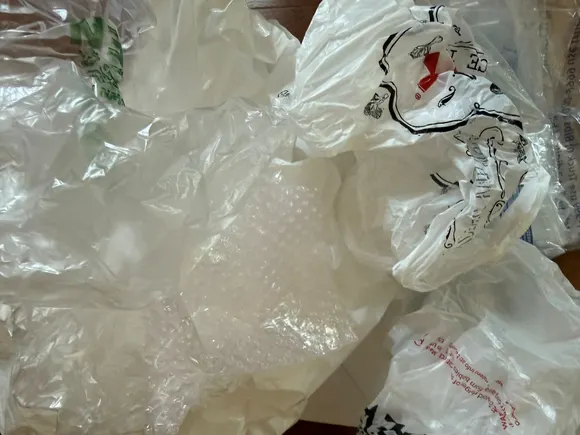
At a webinar hosted by the Northeast Recycling Council (NERC) on Thursday, experts noted that effective recycling solutions for film and flexible plastics are as complex and multi-layered as the material itself. Scaled solutions are critical for collecting, processing, and recycling higher volumes of film and flexible packaging, and rapidly approaching recycling rate requirements in extended producer responsibility (EPR) laws, especially in California, are intensifying this pressure. Meanwhile, MRF operators and recyclers face economic challenges in material handling and end-market development.
Experts discussed how new pilot projects, data collection programs, MRF subsidies, and policy updates are impacting the U.S. film and flexible plastics recycling landscape. But they emphasized that more coordination is needed across the collection, recycling, and manufacturing supply chains.
Here are some key takeaways from discussions featuring speakers from the Flexible Film Recycling Alliance (FFRA), the U.S. Flexible Film Initiative (USFFI), Delterra, The Recycling Partnership, and the Circular Action Alliance.
California EPR deadlines increase demand for solutions
Packaging EPR laws are setting more urgent timelines for the industry to develop better, more efficient recycling systems for flexible and film packaging. California's SB 54 requires a 65% recycling rate for single-use plastic packaging by 2032, and Roxanne Spiekerman, plastics director at the Circular Action Alliance, California's producer responsibility organization, said this is a major driver pushing the process forward.
She noted that CalRecycle currently estimates California's recycling rate for film and flexible packaging is below 5%. Katherine Huded, executive director of materials systems at The Recycling Partnership, said initiatives like CalFFlex, launched by the organization, aim to accelerate solutions to this issue.
"We want EPR to work so that the recycling system functions. Therefore, our goal is to find real recycling solutions for residential film and flexible plastics, especially in California," she said.
As SB 54 begins to take effect, it could lead to a "significant amount of post-consumer PE film entering the system," potentially totaling between 400,000 and 800,000 tons, said Shannon Bouton, president and CEO of the nonprofit Delterra, which works with companies and local governments to design recycling system improvements.
"Currently, the system is not really ready to recycle these materials. There aren't enough processors or recyclers in the system to handle this volume," she said.
Going forward, recyclers, reclaimers, and brands need to collaborate more closely to strengthen the supply chain for this material, she said, "because there isn't enough offtake for this material, which is why recyclers are reluctant to handle it, partly because it's not yet a mature market."
But Bouton said there is hope. Many European countries have implemented EPR for decades and have accumulated experience recycling film and flexible plastics and incorporating them into products. The U.S., however, has not yet incorporated such plastics into new products at scale, "so that's exactly what we're working to help solve."
Collection systems need refined and targeted improvements
Collection systems for film and flexible plastics in the U.S. are primarily focused on drop-off points at stores or recycling centers, with few curbside recycling programs accepting these materials. Meanwhile, "we often treat flexible film as a single material, but in reality, there is a wide variety of flexible films, which affects what we can and cannot do, as well as the success of collection and recycling," said Kyla Fisher, sustainability consultant for the Flexible Film Recycling Alliance (FFRA). FFRA was founded by the Plastics Industry Association.
Fisher said FFRA sees opportunities to expand drop-off collection while improving MRF infrastructure, which could help make curbside recycling more viable in the future. She noted: "Even though store drop-off has been in place for over 20 years, consumers are still unclear about what can be dropped off at stores for recycling. What does that mean for curbside? We have an opportunity to improve education."
FFRA is also running a pilot project targeting another source of film plastics: what she called "small and medium-sized businesses" such as schools that generate large amounts of film but lack convenient recycling access. "How do we ensure smooth logistics, avoiding costly and inefficient 'milk run' transportation, and instead leverage existing logistics to build better reverse logistics chains?"
Two such pilots will launch in California this summer, and FFRA hopes to share results data in 2027.
Flexible film recycling needs financial support
Once plastics are collected, MRF operators need support to process them effectively, said Maite Quinn-Richards, executive director of the U.S. Flexible Film Initiative (USFFI). USFFI, led by consumer packaging companies, aims to demonstrate that MRFs can effectively recycle film and flexible packaging—provided MRFs and recyclers receive operational subsidies to make it economically viable.
"Flexible film recycling currently requires subsidies because its economics cannot cover the full costs of sorting, cleaning, processing, and transporting to recyclers," she said.
MRFs must handle materials that are often contaminated or too lightweight, which can easily mix into the paper stream. Additionally, most film currently entering MRFs "is purely incidental, coming in because of consumer 'wish-cycling'," she said.
Quinn advocated for more contracts to formalize downstream transactions, creating stability and predictability for the market. "MRFs are reluctant to invest in recycling film without reliable downstream buyers; recyclers cannot confidently invest in additional processing capacity if they don't know there is a stable source of supply," she said.
The Recycling Partnership is also working with MRFs handling these materials, Huded said. This work includes a project with two California MRFs and a secondary sorting facility. "We are in close contact with USFFI because some of these facilities may need help processing some of the material," Huded said.
To date, the project involves sending test loads to facilities and "pre-investing" in end markets for the material. TRP also plans to provide technical assistance and financial support for capital improvements. The goal is to "truly ensure that when California's EPR implementation kicks off next year, these materials can flow," she said.
End-market demand is also a critical area of focus, Bouton said. Delterra—with funding from Amcor and Kraft Heinz and technical support from Eunomia—launched an initiative in December to test ways to add recycled flexible film resin to new products in the U.S. that currently do not use this material. The pilot aims to prove feasibility while quantifying the proportion of recycled resin that can be added and the financial support that may be needed to "make the entire system viable for these products."
"We want to build the underlying business case to understand what financial mechanisms are needed to begin scaling the use of this material," Bouton said.
As all these pilots and investments move forward, better data collection practices also need to keep pace, Fisher said. Data transparency will help improve collection and processing across the system and demonstrate that these challenging materials are indeed recycled into new products. "We need to ensure consumer trust," she said.