
From Testing to Shelf: How FMCG Brands Advance Sustainable Packaging Innovation
FMCG brands and packaging suppliers are exploring sustainable packaging solutions that balance environmental impact, performance, and cost through pilot projects, life cycle assessments, and phased testing. From Johnnie Walker's paper-based bottle to Sealed Air's compostable tray, the industry is advancing innovation through careful trade-offs.
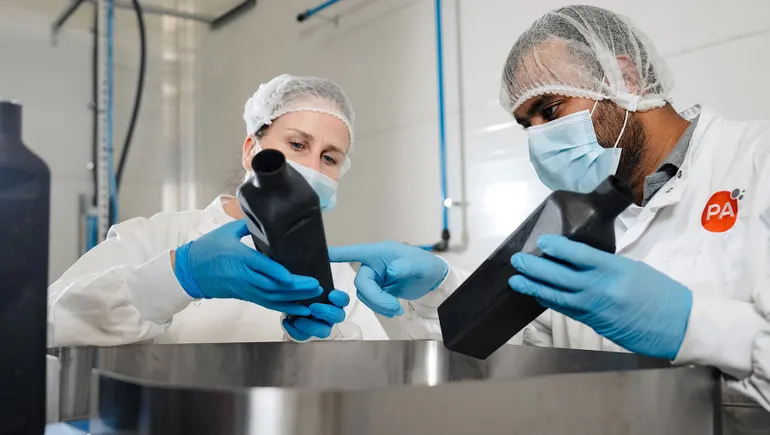
Last autumn, customers at the Johnnie Walker Princes Street 1820 bar in Edinburgh who ordered an Old Fashioned or a Whiskey Sour might have noticed an unusual detail: the whisky in their glass tasted as always, but the bottle it was poured from differed from the classic glass bottle of Black Label—it was a trial bottle made with 90% paper-based material.
For years, pilot projects, trials, and limited releases have been important avenues for brands and their packaging partners to collaborate, experiment, and advance sustainable packaging efforts.
Johnnie Walker's parent company Diageo, in partnership with PA Consulting and PulpPac, developed this new packaging through the "Bottle Collective" project. Dave Lütkenhaus, Diageo's Global Director of Sustainability and Innovation, said the paper bottle is 60% lighter than glass, making it easier for bartenders to carry and use, while retaining the brand's iconic elements, including the embossed Striding Man logo.
"We managed to combine the sustainability benefits with the luxurious look and feel of the bottle," Lütkenhaus said.
FMCG brands and their packaging partners are increasingly working together, setting shared goals and success metrics when developing, testing, and launching innovative packaging solutions. Both sides recognize that designing more sustainable packaging often involves trade-offs.
Tiffani Burt, Vice President of Food Materials Innovation and Development at Sealed Air, noted that more environmentally conscious packaging often comes with a price premium. Companies want to avoid performance declines from switching packaging, or increased risks of food waste and product damage.
"I strongly agree with the idea that innovation is best executed when all key stakeholders are involved and moving forward together," Burt said.
Today, FMCG brands are at a crossroads in sustainable packaging innovation, facing both internal and external pressures. They need to meet corporate sustainability goals—many of which have set2030 deadlines—as well as scrutiny from consumers and regulators over reducing single-use or virgin plastic use. At the same time, they still need to control costs and maintain profit margins.
Brands "want sustainable solutions—provided they are more cost-effective," said Dustin Smith, CEO of BoldtSmith Packaging Consulting.
In many countries, choosing between cost savings and sustainability is no longer optional. Five U.S. states have passed Extended Producer Responsibility (EPR) policies for packaging.
"I think EPR will trigger behaviors that many brands would have voluntarily chosen anyway," said Bakul Wadgaonkar, Sustainability Director at Sappi North America. She predicts that early adopters will continue to set the benchmark, and others will follow, making lightweighting, recyclable materials, and circularity the norm in the future.

First step: Life Cycle Assessment
When you think of "sustainable" packaging, what comes to mind? Less plastic? Smaller or thinner packaging?
For consumers, switching from plastic to paper, or from foam to pulp, might seem like the sustainable answer on the surface, but there are many other factors to consider.
When FMCG brands approach suppliers with ideas for more sustainable packaging, one of the first things both parties do is conduct alife cycle analysis. Although many in the industry consider LCA to be an imperfect system, it remains an important tool for studying the impact of packaging choices from raw materials to final disposal.
"We always want to ensure that if we offer an alternative to an FMCG brand, it truly is a genuinely sustainable alternative," Wadgaonkar said.
Wadgaonkar said that when Sappi works with brands to evaluate potential new packaging, it assesses overall carbon footprint, impact on biodiversity, and water management, among other factors.
Depending on who you ask, the packaging field is full of differing arguments about which materials have better environmental properties, and brands may come to different conclusions.
Take Diageo's Johnnie Walker trial as an example. The company believes the main advantages of the new bottle are carbon reduction and weight reduction. An initial external LCA showed that the paper bottle prototype could potentially reduce carbon emissions by up to 47% compared to glass.
When examining beverage container trends, Michael Martin, founder and CEO of reusable foodservice company r.World, noted thataluminum cansare increasingly popular among brands looking to distance themselves from plastic. But Martin said that although aluminum cans are recyclable, their life cycle still has hidden concerns in other parts of the supply chain.
He pointed out that manufacturing the initial aluminum can involves mining, which can lead to toxic runoff. Then, manufacturers need to ship the aluminum from its source to the plant, smelt it, and hope consumers actually recycle the can. "Every step takes a toll," Martin said. He believes that ultimately, packaging suppliers and FMCG brands must clarify which sustainability attribute they are trying to optimize.
Burt recalled a major client that contacted Sealed Air whenEPR regulationscame into effect. The client wanted to move to a fiber-based tray solution while maintaining shelf life and plant operational efficiency without increasing the risk of food waste.
"When we balanced all the key requirements together, we began exploring multiple ways to achieve it," Burt said. Fiber was one possible option, but after prototyping, experimentation, and trials, it was ultimately a lighter-weight bioplastic that best met all the requirements.
The comparison between expanded polystyrene foam and molded pulp is another case where LCA might reveal unexpected results. Pulp may be more recyclable, but molded pulp typically requires significant water use during production. Ultimately, in terms of carbon footprint impact, the two materials are very close, Smith said.
"When you compare Option A and Option B, you're not just looking at whether it can be recycled," Smith said. "There are so many other factors to consider."

Test, learn, iterate
Trials and pilots are an important part of the sustainable packaging process, allowing brands and suppliers to determine whether they are meeting key performance indicators and avoiding functional issues before making large-scale investments.
"We tend to take a phased approach," Burt said. "So we can solve problems step by step."
In some tests, Sealed Air starts with a small group of about 200 consumers to gather feedback on new packaging and observe whether they notice differences from the old version. Sealed Air also works to understand what drives consumer purchasing behavior and whether they understand the sustainability claims printed on the packaging.
After that, packaging suppliers and brands conduct packaging trials in a small geographic area for several weeks, monitoring sales and product quality during the period and adjusting as needed. The next step is expanding to a larger region or more retailers.
Sealed Air takes this multi-step approach because "we rarely get it right the first time," Burt said. "You'll encounter turning points or learning opportunities multiple times."
The key is to identify potential problems early and pivot quickly, avoiding bigger troubles after scaling up packaging production.
For its fiber-based Johnnie Walker bottle, Diageo initially conducted a small-scale trial at one bar over four weeks with 250 bottles. The test allowed the company togain some initial experience. Bartenders liked the lighter weight of the paper bottle and the fact that it wouldn't shatter like glass, but they needed to adjust how they held the bottle when pouring. The neck was too short, so future versions of the packaging will need a longer neck.
Lütkenhaus said Diageo embraces the philosophy of "progress over perfection" in its innovation process. The company plans to continue working with PA Consulting, PulpPac, and the Bottle Collective to develop the next generation of fiber bottles before scaling up.
Smith said small-scale shipping is typically part of the testing process for suppliers and brands. In trials, stakeholders might ship 50 to 100 products in new packaging to observe how they perform from warehouse to truck to store shelf.
"Some things can't be replicated in a lab. You have to actually ship it," Smith said.

What does success look like?
Throughout the LCA and testing process, brands and packaging suppliers frequently check against predetermined goals. Function over form is critical.
"If changing material formats compromises product integrity, shortens shelf life, or increases food waste, we won't adopt it," said Sealed Air's Burt.
Sappi's Wadgaonkar gave an example: a plastic or glass bottle for cough syrup might have a poly-coated liner to protect the medicine. A brand might want to move away from poly coatings toward all-paper packaging. Sappi would evaluate the functional requirements, why the poly coating was originally there, and how the new paper packaging can provide the same barrier performance while meeting the brand's sustainability goals.
Although liners and barriers can make mono-material packaging harder to achieve, they are especially important in the food and beverage sector. Diageo retained a thin plastic liner in its fiber-based Johnnie Walker bottle.
Any new packaging must also resonate with end users. Consumer interaction with products often involves walking down store aisles, picking up and touching the product, so paying attention to visual and tactile characteristics is important, Wadgaonkar said.
PepsiCo's Frito-Lay experienced this firsthand back in 2008 when it launched a compostable bag for SunChips. The problem: the bag made a loud crinkling noise, spawning internet memes and jokes, andforced the brand to redesignquieter compostable packaging.
User-friendliness is a top priority for Toufayan Bakeries, which launchednew packagingfor its pita bread in October, saying it uses less plastic than before and features aresealable zipper closure. Karen Toufayan, the brand's Vice President of Marketing, said in an email that the resealable zipper reduces some plastic while enhancing product freshness and consumer convenience. The bakery brand made implementing the new packaging without increasing consumer costs a priority, "ensuring that eco-friendly choices remain accessible," Toufayan said.
In Diageo's Johnnie Walker bottle trial, the biggest test was observing how bartenders interacted with and poured from the bottle, but consumers did have some interaction with the bottle as well, Lütkenhaus said. Consumers said the bottle looked high quality, but they weren't sure why Diageo had developed a paper bottle—a lesson for FMCG brands that they need to more clearly communicate the benefits of lightweight materials to consumers.
The ultimate test of a successful packaging launch is whether consumers start buying more of the product, leading retailers to increase orders and allocate more shelf space to it.
"You want it to drive more market share growth for the customer," Burt said. "That's the ultimate goal."
Visual editor Shaun Lucas contributed to this article.