
RFID Packaging Applications Expand into New Markets; FDA Traceability Rule Delay Does Not Halt Technological Progress
The U.S. FDA has extended the compliance deadline for the Food Traceability Rule to July 20, 2028, but the deployment of RFID (Radio Frequency Identification) technology in the packaging sector has not stopped as a result. Industry participants and observers point out that while the delay may slow short-term progress, it is unlikely to reverse the overall development trajectory. Beyond food traceability, RFID is entering emerging application scenarios such as anti-counterfeiting for high-value goods and cold-chain pharmaceutical monitoring, while technological advancements continue to address reading challenges in metal and liquid environments as well as recyclability debates.
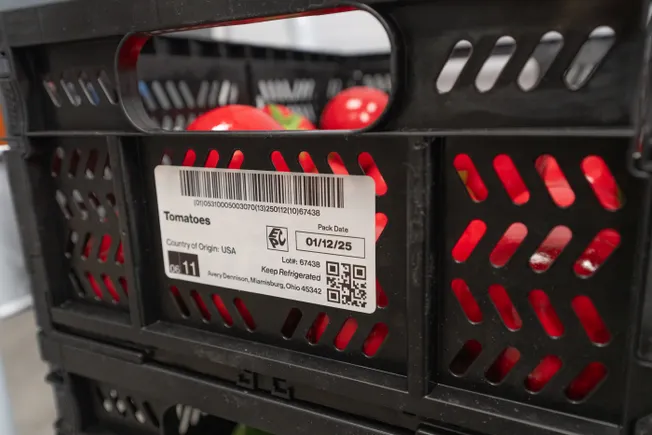
Although the U.S. Food and Drug Administration (FDA) has delayed implementation of the Food Traceability Rule, adoption of tracking tools by companies across the supply chain has not stalled. Practitioners and observers in the RFID (radio-frequency identification) packaging space believe the timeline adjustment will not weaken related technology development and application momentum.
Previously, food companies and retailers actively embraced tracking technologies such as RFID, and packaging suppliers worked to integrate RFID tags into their products. However, as the FDA's original January 2026 compliance deadline approached, some companies faced difficulties in timely technology adoption, prompting organizations including the Food Industry Association to applaud the FDA's March decision to extend the compliance deadline by two and a half years, to July 20, 2028.
The FDA proposed the rule during the first Trump administration, following multiple E. coli outbreaks linked to romaine lettuce. The rule aims to strengthen producers' recordkeeping and traceability capabilities for high-risk contaminated foods, enabling companies to quickly identify implicated suppliers during foodborne illness outbreaks. Companies must track key data across the supply chain and promptly submit required records to the FDA when public health may be at risk.
Government mandates once accelerated technology deployment. Although RFID has existed for decades, Sandeep Unni, senior director analyst in Gartner's retail research practice, said he has observed a "revival of RFID investment" over the past 12 to 18 months. "This became an urgent task, and companies needed to pivot quickly and invest to ensure compliance by January 2026." However, implementation speed ultimately did not improve sufficiently, prompting the FDA's delay decision. Sources say the delay may slow momentum but is unlikely to change the overall trajectory.
Kirsten Newquist, CEO of Identiv, a digital security and IoT technology company, said: "This will slow the anticipated boost for the RFID industry, but I don't think it will stall it. From what I understand, the FDA remains committed to implementing these regulations—it's just pushing back the timeline so everyone has ample room to build the corresponding systems." Experts note that despite potential short-term implementation slowdowns, the field will ultimately see growth. Technology and packaging companies are continuing to advance RFID designs to overcome known challenges such as temperature adaptability and ensure recyclability.

Multiple driving factors
Although RFID has a foothold in transportation and logistics, observers note its application in the food sector remains in early adoption stages. Newquist said: "This technology truly enables compliance, and we believe it is more efficient and cost-effective than traditional barcodes or QR codes."
Over the past decade, some retailers and food companies have been early adopters of RFID in packaging for reasons beyond FDA requirements. Walmart is seen as a major force driving corporate adoption of the technology. More than twenty years ago, Walmart launched a mandate requiring some suppliers to use RFID on certain products, and the requirement has since expanded to cover nearly all products it sells.
Grocery giants Albertsons and Kroger have also established traceability programs. The former was an early adopter more than twenty years ago; the latter announced in October it would roll out Avery Dennison's RFID inventory automation technology across its fresh food departments. Chipotle, after completing a pilot at 200 restaurants in the Chicago area, has introduced RFID nationwide and requires its suppliers to tag products. According to the company, it is the first restaurant chain to adopt such an inventory management system.
In the packaging and labeling space, Avery Dennison is often seen as an RFID leader. Its early work focused on applying smart labels to soft goods such as apparel, and it has now expanded into other packaging markets, including food. Julie Vargas, vice president and general manager of Avery Dennison's identification solutions division, said: "We embed the inlays directly into packaging materials and leverage a strong foundation in materials science to make it as seamless as possible. When a food safety event occurs, you know exactly those serial numbers and can isolate them for recalls."
Companies continue to discover new markets for the technology. Newquist noted that RFID is increasingly used for inventory management and anti-counterfeiting of high-value items such as wine, watches, and jewelry.

Before scaling RFID deployments, Identiv's customers are typically interested in pilot projects—this is especially critical for new applications. Newquist said: "They want to confirm assumptions about return on investment and validate practical implementation issues: tag placement, read rates, and the various assumptions involved in planning and launching a new RFID system."
RFID can improve efficiency by dramatically reducing time spent on labor-intensive inventory counts. Vargas said: "When counting boxes, you don't need to scan 100 barcodes one by one—you just wirelessly scan 100 items and get 100 numbers. The supply chain has never been this complex in the past four or five years, so optimizing such scenarios is highly valuable to companies."
However, integrating the technology into packaging still has room for improvement. Gartner's Unni said: "Physical characteristics can hinder certain types of packaging." Radio frequency "is not very compatible with metal and liquids, so we've done a lot of innovation to overcome that," Vargas said. She described how embedding specialized inlays or antennas directly inside packaging—rather than surface labels—helps alleviate some of these challenges.
Although radio frequency technology has historically performed poorly under temperatures or humidity outside normal environmental ranges, that is also changing. Newquist said modern systems now support real-time location tracking and temperature monitoring in cold chain environments, including in pharmaceuticals. Concerns remain about metal smart label components—such as heating frozen meal packaging with trackers in microwaves—but design evolution is making progress. Unni said that while technological improvements are addressing some challenges, "the reality is that broader adoption in these types of environments still lags."

Recyclability test
Despite RFID's many potential benefits, its impact on packaging sustainability has also drawn attention—namely, whether and how the metal wires, plastics, and other materials in smart labels affect packaging recyclability. Sources say research and testing generally show that RFID devices do not harm recyclability.
Vargas said: "Our mission is to make it as non-invasive as possible. We've done extensive work with multiple material recovery facilities (MRFs) and recycling plants to ensure it doesn't affect the recycling process." Last year, Smurfit Westrock released a report on the topic, based on a study conducted with Western Michigan University on corrugated boxes with smart labels, including RFID versions. Researchers examined where label materials go during the pulping process. After testing paper samples made from recycled pulp, metal detectors found no residual metal. The researchers concluded that smart labels have no significant impact on the recyclability of corrugated boxes.

John Dwyer, director of business development at Smurfit Westrock, said in a 2024 interview: "All materials are removed during the grinding process. We can easily separate the corrugated material from the waste, so there is zero negative impact on fiber recycling." Dwyer noted that although smart labels can be separated from recyclable packaging materials, the tracking components themselves are not recycled but treated as waste, similar to tape or staples separated from corrugated boxes during recycling. "The material volume is extremely small and negligible," he said, noting that the silicon chip inside the label is smaller than a grain of sand.
Smurfit Westrock has observed large numbers of smart labels entering its recycling facilities and expects that volume to surge. Dwyer said that at one plant alone, the company recently processed more than 1 million RFID labels in just a few months. "So we know it's happening, and we know it's growing." The company felt it was necessary to conduct new research on RFID and box recyclability because the last significant study on the topic occurred nearly 20 years ago, predating many technological advances that could affect modern recycling practices. Smurfit Westrock wanted to reach conclusions before the technology reaches critical mass, when correction costs would be too high.
Dwyer said: "We didn't want to tell people upfront that putting labels on packaging is a good thing without reliable evidence. So we did our homework on the back end. Now we can recommend their use with confidence."

Expected expansion
Even if RFID implementation experiences a temporary slowdown due to the FDA's extended compliance deadline, sources predict significant growth in the field over the coming years. Avery Dennison reported a 15% compound annual growth rate in smart label sales between 2018 and 2024 and is targeting the same percentage for future long-term organic sales growth. According to a recently released investor presentation, the company sees substantial growth opportunities in markets such as food.
Discussing traceability trends, Avery Dennison's Vargas said early RFID adopters "are providing a leadership space around which a real flywheel effect will form." But other wireless tracking technologies such as Bluetooth low energy and near-field communication are entering the field, putting pressure on RFID's market position.
Even so, sources say RFID's use in packaging will not fade in the near term. "RFID remains very important," said Gartner's Unni, adding that he is "cautiously optimistic" about its prospects. "Those companies that invested early in RFID... I think this is a natural extension of expanding the technology across their supply chains for additional benefits and compliance." Observers believe RFID will not only maintain its role in packaging and product traceability but will actually expand—driven both by organic demand and regulatory push.
Phenix Label announced in January that it had doubled its RFID packaging production capacity, targeting hard-to-label retail items including certain liquids. Michael Roxland, senior paper and packaging analyst at Truist Securities, described in a March report to investors a newly announced partnership between RFID technology solutions provider Radar and retailer Old Navy, saying the project demonstrates retailers' "continued interest in the technology." Sources say tariff-related economic uncertainty could dampen traceability investment, but the impact may be short-term. Roxland noted in April that, for example, most of Avery Dennison's cross-border trade in North America, including RFID technology, complies with the USMCA.
RFID in packaging is not only about food safety and quality assurance. But food traceability is likely the key force pushing the technology into mainstream applications in the coming years. Vargas said: "This will become the track the industry runs on, and we're just getting started."