
EPR compliance requires full lifecycle traceability. Are enterprises ready?
EPR regulations are driving the packaging industry to re-examine the durability of product identification. Traditional tracking systems relying on barcodes, RFID, or BLE devices are prone to failure in harsh reuse environments, leading to broken traceability chains. Mono-material labeling technology integrates identification directly into the plastic substrate, eliminating adhesive layers and secondary films, achieving identification with the same lifespan as the packaging and providing a reliable foundation for EPR compliance.
For years, packaging decisions have focused primarily on cost, protection, transport efficiency, and shelf performance. Today, regulators and brands are asking more operationally challenging questions: EPR (Extended Producer Responsibility) is driving this conversation.
Can materials be efficiently recycled? Can reusable packaging remain traceable through years of circulation and reuse?Can companies verify compliance, recycling rates, and circular performance across increasingly complex supply chains?
These questions are forcing the industry to re-examine an element long considered a secondary operational detail:Product identification.
In modern reusable packaging systems,identification is no longer a simple barcode or label affixed at the end of production.It has become part of the infrastructure supporting automation, recycling systems, traceability, and long-term circular operations.
And this is giving rise to a problem many organizations are just beginning to recognize.
Every tracking system has hidden weaknesses
Every modern tracking and tracing platform relies on physical identification.
The difference between systems lies only in their assumptions about the integrity of that identification.
Optical systemsassume barcodes are always readable.
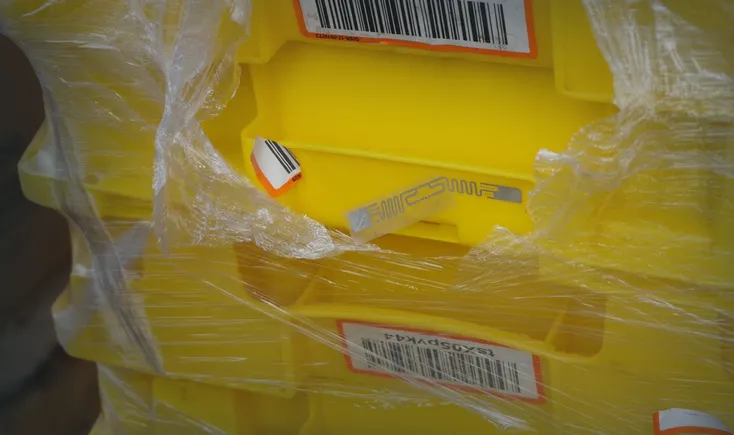
RFID systemsassume tags can withstand high temperatures, abrasion, and repeated handling, and remain attached to the asset.
Bluetooth Low Energy (BLE)and active connected devices assume the device is always powered, functional, and present.
In controlled environments, these systems can perform well.But reusable plastic systems are rarely in controlled environments.
High-density polyethylene (HDPE) and polypropylene assets undergo wash cycles, chemicals, UV exposure, abrasion, forklift handling, loading docks, and outdoor yards. Over time, surfaces degrade, labels peel, tags fall off, devices fail or are lost.
Once the identification layer begins to fail, the larger systems connected to it gradually fall out of sync.
Tracking gaps widen, manual intervention increases, automation reliability weakens, and recycling systems lose visibility.The software is usually not the problem.
The failure is physical.
A blind spot in supply chain innovation
Data is the fuel of modern supply chains. AI agents, analytics, efficiency—all driven by real-time data. Yet, little attention has been paid to whether the physical identification itself can endure to support these systems.
This is changing.
Because before assets can be digitized in the supply chain, they must first be identifiable. This is where mono-material label technology approaches the problem differently.
Instead of adding a separate identification layer onto plastic, this technology fuses the identification directly into the compatible plastic substrate itself. No adhesive layer, no secondary film, no separation between label and asset.
As EPR programs continue to expand globally, the importance of these environments only grows. Circular systems require packaging assets to have longer lifespans, more frequent circulation, and remain traceable across far more operational touchpoints than traditional linear packaging systems demand.
This reality is beginning to expose one of the industry's biggest blind spots:Many identification systems were originally designed for transport durability, not lifecycle durability.
Why this matters for EPR
For years, packaging innovation has focused primarily on making materials recyclable. EPR is pushing the industry to address a more complex challenge:maintaining identification throughout the asset's entire operational lifecycle.
This shift is critical because circular packaging systems depend on long-term traceability. Assets may circulate for years, crossing multiple users, facilities, recycling streams, and reuse loops. If the identification layer fails mid-lifecycle, the larger systems connected to it will begin losing reliability long before the asset reaches end-of-life.
This is where mono-material label technology approaches the problem differently. Instead of adding a separate identification layer onto plastic, it fuses the identification directly into the compatible plastic substrate. Barcodes, QR codes, warning labels, or serial numbers become part of the product, not an afterthought.
This distinction sounds subtle, but it is operationally significant.
No adhesive layer means no delamination over time; no secondary film means no separation between the identification layer and the asset. The identification remains aligned with the packaging lifecycle at the material level.
And this alignment is increasingly important becauseEPR systems require packaging to remain identifiable, traceable, durable, and material-compatible through years of use and eventual recycling.