
PLA Bioplastic Controversy: The Environmental Credentials of the Packaging Industry's Darling Under Scrutiny
The PLA cups at the Paris Olympics have drawn attention, but environmental controversies surrounding this bioplastic persist: its degradability, compostability certification, life cycle assessment, and impact on agriculture have all been questioned. This article reviews the history of PLA, its current market status, and various perspectives.
This summer, during the Paris Olympics, PLA cups used by consumers at the Cass Pocha outdoor food stall near the Eiffel Tower were placed in dedicated recycling bins. This scene stems from a collaboration between Cass Beer, TotalEnergies Corbion, and Korean bottler Sansu. Large sporting events or festivals, especially in cities that ban certain plastic packaging, often use food and beverage packaging made from polylactic acid (PLA).
Single-use packaging is the largest end-use for PLA, and demand continues to grow. The global PLA market (including agricultural, textile, and 3D printing applications) is expected to achieve a compound annual growth rate of nearly 12% by 2032, when the market size may exceed $3 billion. However, as the PLA packaging market expands, controversy over its environmental attributes is also intensifying.
The origins of PLA
A century ago, American chemist and inventor Wallace Carothers rose to prominence at DuPont, when materials science was focused on creating new synthetic materials. Carothers' experiments with long-chain chemicals led to the creation of the synthetic polymers nylon and neoprene, which had a profound impact on society. During this period, Carothers also plasticized a natural resource—lactic acid. In 1932, he discovered that this chemical, derived from plant starch, could be converted into PLA plastic.
For decades afterward, PLA did not gain commercial attention until biomedical engineers found it suitable for implantable devices such as stents and sutures. The U.S. Food and Drug Administration (FDA) approved PLA for biomedical use in the early 1970s. In the late 1980s, agricultural company Cargill began exploring new products derived from the vast amounts of corn it processed annually. Fermenting corn sugar into lactic acid provided the feedstock for PLA, and Cargill chemists began experimenting with large-scale PLA production. In 2002, Cargill opened a PLA plant in Blair, Nebraska, under the brand name NatureWorks.
"At that time, there was significant attention on carbon footprints and early ideas about plastic waste," said Leah Ford, former global marketing and communications director at NatureWorks. She also noted growing interest in defossilizing materials due to rising fossil resource costs. This occurred before the U.S. hydraulic fracturing boom, which significantly changed the economic landscape. Since then, oil and gas have increasingly accounted for a larger share of the petrochemical industry, expected to represent half of oil demand by mid-century.
Despite these headwinds, PLA has established a foothold in niche packaging applications thanks to its ability to fully biodegrade in industrial composting facilities. Today, NatureWorks produces 150,000 tons of PLA under the brand name Ingeo, owned equally by Cargill and Thai company PTT Global Chemical. The company is also building a second plant in Thailand with an annual capacity of 75,000 tons of sugarcane-based PLA. This output is comparable to TotalEnergies Corbion's annual sugarcane-based production in Thailand. ADM recently canceled plans for a similar-scale plant in Illinois, citing high construction costs.
The nonprofit Clean Production Action considers PLA one of the more preferred bioplastics in its GreenScreen certification program, which evaluates categories such as toxicity.
Another single-use plastic
Despite its environmental credentials, PLA still faces scrutiny. The nonprofit Beyond Plastics claimed in a July report that plastics made from petroleum alternatives, such as PLA, are not necessarily better than petroleum-based options. "Bioplastics lack regulation, allowing companies to market their products as more environmentally friendly than traditional plastics without meeting standards for safety, toxicity, climate change impacts, or degradation time," said Judith Enck, president of the organization, at the time. Beyond Plastics' report also criticized the Biodegradable Products Institute (BPI), which works with brands to develop and award compostability certifications based on ASTM International's testing standards for compostable plastics. Beyond Plastics accused BPI of inherent conflicts of interest, as its board members come from some of the world's largest petrochemical companies, including BASF and TotalEnergies Corbion.
BPI responded to the report and refuted its conclusions. Executive Director Rhodes Yepsen said in an interview that BPI board members must act in the best interest of the organization's purpose, even if it conflicts with their business operations. He cited BPI's prohibition of PFAS chemicals in any certified product, which goes beyond ASTM standard requirements. "We have a track record of our members and board supporting these bold moves," he said, adding that collaboration with industry representatives is key to BPI developing rigorous and widely accepted certifications. BPI uses third-party testing body DIN Certco to certify products.
Enck declined an interview but said via email that "voluntary self-regulatory standards do not work" and argued that for BPI-certified products, conflicts of interest among board members cannot be mitigated. She called for federal compostability standards and said the Federal Trade Commission's (FTC) Green Guides (which include provisions against false or misleading compostability claims) are inadequate and unenforced. The FTC is currently reviewing its Green Guides for environmental marketing, with updates possibly released this year.
Yepsen agreed that new materials should be reviewed and that society needs to move away from single-use packaging. "We don't advocate for a one-to-one replacement from conventional plastics to compostable plastics," he said, but he also believes compostable biodegradable materials are "a very valuable solution" and worries that "casually poking holes in compostable solutions" leaves consumers with no choice but "existing" materials.
Performance, cost, and life cycle
PLA's sustainability image is key to brand purchasing decisions, but its performance attributes and cost are equally, if not more, important to buyers. Compared to more commonly used PET, PLA has low heat resistance and poor gas and water vapor barrier properties, limiting its use in certain food packaging. It is used in food service cups, clamshells, straws, and cutlery. PLA remains more expensive than conventional plastics.
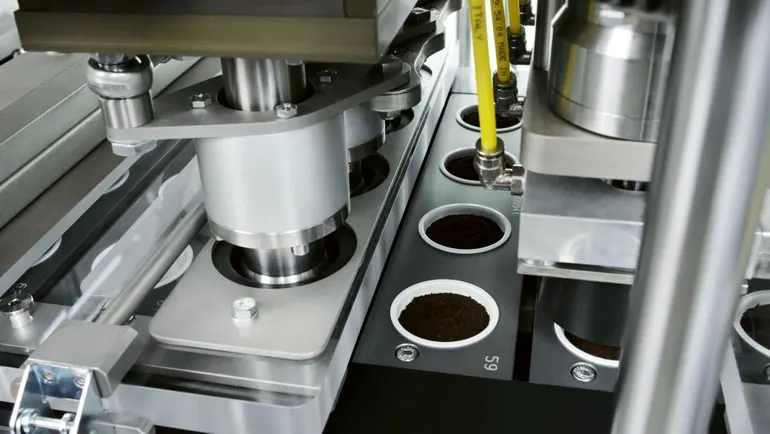
Ford declined to disclose Ingeo's pricing. NatureWorks and TotalEnergies Corbion sell heat-resistant PLA resins for applications such as single-serve coffee capsules. Ford said Ingeo grades designed for heat resistance are still intended to pass compostability tests. She also mentioned that UK tea brand PG Tips has replaced its tea bags (previously made from compostable cellulose and polypropylene) with compostable PLA. McDonald's and Starbucks also use paper cups coated with Ingeo PLA in regions requiring compostable food service ware.
Setting aside performance and cost, it is difficult to find data that clearly compares the environmental benefits of plant-based compostable plastics like PLA with petroleum-based non-compostable plastics. Studies show that PLA production emits fewer greenhouse gases than conventional plastics. TotalEnergies Corbion cites life cycle assessments of PLA conducted by European plastics trade organizations, internal sources, and its scientists, claiming its PLA has a carbon footprint 75% lower than "most traditional fossil-based plastics."
Michigan State University professor and bioplastics expert Ramani Narayan says life cycle assessments (LCAs) are important tools, with his PLA research dating back to the 1990s when Cargill funded his lab. He believes LCAs should always be conducted to ensure "there are no red flags in terms of emissions or chemical use such as PFAS." However, Narayan added that LCAs can tell a particular story due to "boundary setting," i.e., which inputs or outputs are considered. LCAs have reached very different conclusions about the sustainability of corn ethanol.
Narayan often hears criticism of PLA's sustainability because in the U.S. it is made from corn (and from sugarcane in Asia). He says producers like Cargill derive multiple products from corn, including animal feed and industrial corn starch. He argues this means PLA demand adds value for farmers. The sugar needed to produce lactic acid could be extracted from food waste, which would have the lowest environmental cost, but the systems to establish such supply chains are complex, and PLA is not currently sourced from waste on a large scale.
When considering LCAs, another key factor is whether it focuses only on sourcing and production (i.e., "cradle-to-gate") or also includes end-of-life factors (i.e., "cradle-to-grave"). Additionally, not all LCAs consider the environmental impacts of agriculture, such as land and water needed to grow crops. TotalEnergies Corbion's LCA does include land-use change but does not consider end-of-life factors. Scholars say this is important because finished PLA products store carbon dioxide, which is released again as PLA biodegrades in industrial composting environments.
Earlier this year, the NGO Plastic Pollution Coalition, in partnership with Eunomia Research & Consulting, released a report specifically on PLA titled "Bioplastics Are Garbage." The report focused on the climate impacts of the industrialized agricultural systems that PLA manufacturers rely on, stating that such agribusinesses may harm vulnerable fence-line communities through air and water pollution. Public health impacts around petrochemical plants are also well-documented.
The compostability factor
Supporters say another key benefit of compostable food packaging, including PLA products, is that it helps divert food residues in packaging to composting systems. The U.S. Environmental Protection Agency estimates that emissions from U.S. food waste are equivalent to the greenhouse gas emissions of 42 coal-fired power plants. Narayan says BPI certification signals to industry and stakeholders that "the packaging meets industrial composting requirements, will not cause problems, and will not persist and accumulate in the environment."
After discovering that compostability in the lab does not always translate to compostability in real-world facilities, the Compost Manufacturing Alliance began offering its own testing services and publishing a list of packaging materials proven compostable, categorized by industrial composting system type. The list includes certain PLA products. Other end-of-life options for PLA may include mechanical or chemical recycling, but market options are limited, and Packaging Dive found no major U.S. city recommending PLA recycling in its programs.
NatureWorks' Ford confirmed: "PLA recycling is not widely conducted in the U.S., mainly due to scale issues. There is insufficient PLA volume in the market, making it uneconomical for recyclers to sort or collect PLA." This means that if consumers cannot send the material to industrial composting facilities, it is likely to end up in landfills or incinerators. Neil Edgar, executive director of the California Compost Coalition and board member of the U.S. Composting Council, expressed concern. "The idea is that if PLA is fully compostable, there won't be a problem," he said, "but that's a big 'if.'" Edgar estimates that of all PLA packaging currently in use, very little is actually composted.
The Plastic Pollution Coalition report pointed to the lack of composting infrastructure and the fact that PLA can biodegrade in landfills or when littered as concerns. The report concluded that without "appropriate policies and regulations to reduce or eliminate unintended and negative production consequences," PLA is not necessarily a sustainable choice. According to BioCycle's 2023 survey of residential composting systems, only about 12% of U.S. households have access to municipally supported curbside or drop-off food waste collection systems. Such composting systems are growing, driven by policies requiring states to develop organics recycling infrastructure, but contamination from conventional plastics has led some composters to stop accepting compostable packaging.
Additionally, the U.S. Department of Agriculture requires that compost must not contain synthetic substances if composters want their products certified as organic, meaning they cannot accept PLA. Last year, BPI submitted a rulemaking petition asking the agency to amend its regulations on allowable compost feedstocks to include materials meeting ASTM International compostability standards. The agency will consider the petition at a meeting in late October. If the standards remain unchanged, composters selling products under organic regulations will need to continue filtering out PLA and other compostable packaging materials.
PLA that ends up in landfills (whether due to unavailability of industrial composting or being filtered out during preprocessing) will fragment and may decompose over time, releasing greenhouse gases stronger than carbon dioxide. "Under those (anaerobic) conditions, the biological environment converts it to methane," Narayan said. Methane is 25 times more potent than carbon dioxide over 100 years. A 2011 study commissioned by NatureWorks found that the amount of methane released by PLA depends on various variables, including geography and landfill management practices. As for the litter factor, even in areas with well-established waste collection infrastructure, some littering is considered inevitable.


